
Choosing between roller shades vs Roman shades often comes down to more than appearance. Both can provide privacy, light control, and a polished custom look, but they create very different effects within a room.
At We Rack Designs, we help homeowners choose window treatments that complement the surrounding interior while meeting practical needs. Understanding how roller and Roman shades differ in style, operation, maintenance, and cost can make the decision much easier.
Roller shades are generally best for homeowners who want a clean, streamlined appearance, simple operation, and minimal fabric at the window. Roman shades are better suited to spaces where softness, texture, and a more decorative appearance are priorities. Both can offer excellent privacy and light control when properly customized.
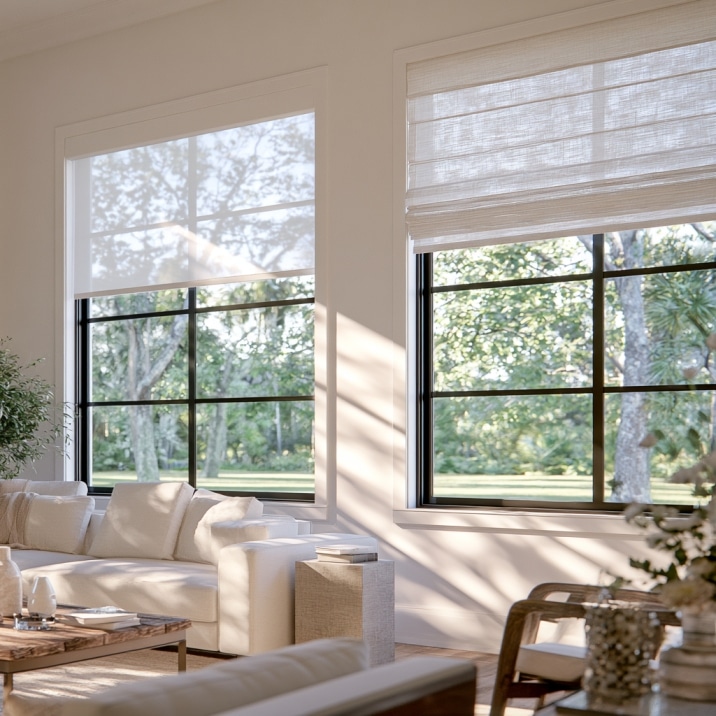
What Are Roller Shades?
Roller shades use a single piece of material that rolls around a tube positioned at the top of the window. When raised, most of the material disappears into a compact roll, leaving the window relatively unobstructed.
Their simple construction makes them especially appealing in contemporary and transitional interiors.
Depending on the material selected, roller shades can provide different levels of light control. Light-filtering fabrics soften incoming sunlight, solar materials can help manage glare, and room-darkening options provide greater privacy and light reduction.
Homeowners can explore these options as part of our custom blinds and window treatments when planning treatments for individual rooms or an entire home.
What Are Roman Shades?
Roman shades are fabric window coverings that raise into horizontal folds. Rather than rolling around a tube, the fabric stacks or folds as the shade opens.
This construction gives Roman shades their distinctive decorative character.
Different fabrics, colors, patterns, and fold styles allow Roman shades to work well with traditional, transitional, and contemporary interiors. They can introduce softness into rooms containing harder architectural materials such as cabinetry, stone, tile, or wood flooring.
For homeowners coordinating several design elements during an interior remodeling project, Roman shades can become part of the overall material and color palette rather than simply serving as a functional window covering.
Roller Shades vs Roman Shades at a Glance
|
Feature |
Roller Shades | Roman Shades |
|
Appearance |
Clean and streamlined |
Soft and decorative |
|
Fabric when raised |
Rolls compactly |
Stacks into folds |
|
Best suited for |
Modern, minimal interiors |
Layered, elegant interiors |
|
Light control |
Excellent with proper material |
Excellent with proper fabric or lining |
|
Maintenance |
Generally easier |
Depends on fabric |
|
Visual impact |
Subtle |
More noticeable |
|
Motorization |
Commonly available | Available with compatible systems |
| Typical cost | Often more economical |
Often higher due to fabric and construction |
Neither option is automatically better. The right choice depends on the room, window dimensions, desired appearance, privacy requirements, and how frequently the treatment will be operated.
Roller Shades vs Roman Shades for Interior Design
When Roller Shades Work Best
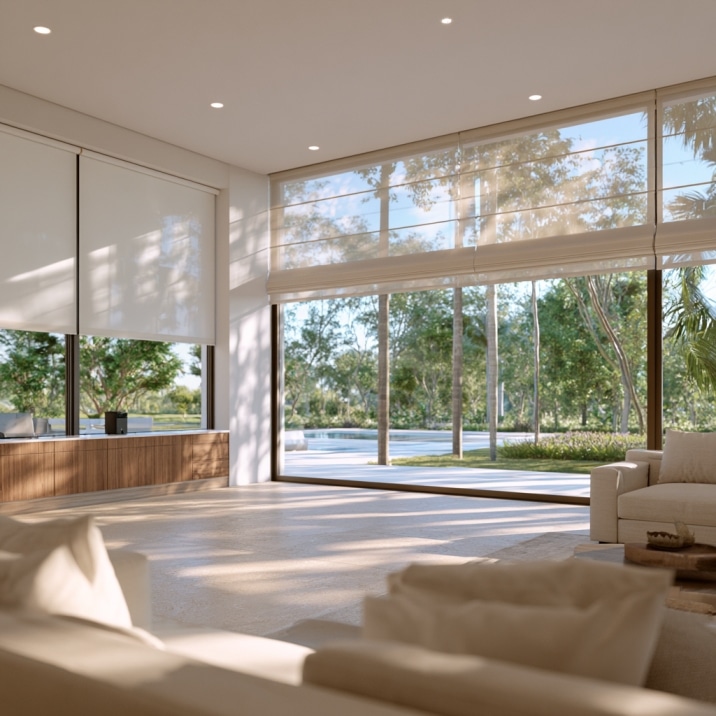
Roller shades are a strong choice when homeowners want the window treatment to remain visually understated.
We often recommend considering them for:
- Contemporary living spaces
- Home offices
- Bedrooms with minimalist interiors
- Large windows where bulky treatments may feel overwhelming
- Rooms where maximizing the visible window area is important
Because roller shades retract compactly, they can complement clean architectural lines without adding excessive visual weight.
They can also work particularly well in kitchens where cabinetry is already the dominant design feature. When planning kitchen remodeling, coordinating the shade material with cabinetry, countertops, flooring, and wall colors can create a more cohesive finished space.
When Roman Shades Work Best
Roman shades make a stronger decorative statement. Their folds introduce depth and texture, which can help soften rooms dominated by straight lines and hard surfaces.
They are particularly attractive in:
- Dining rooms
- Primary bedrooms
- Formal living spaces
- Transitional interiors
- Traditional homes
- Rooms where fabric is an important design element
Roman shades can also coordinate with upholstery, rugs, bedding, or decorative accents to create a layered interior.
Which Shade Provides Better Light Control?
Both styles can provide effective light control. The material matters more than whether the shade is Roman or roller.
A light-filtering roller shade, for example, allows daylight into the room while reducing direct glare. A room-darkening material provides significantly greater light reduction.
Roman shades offer similar flexibility through fabric selection and optional linings.
When evaluating either option, consider how the room is actually used throughout the day. A bedroom may need greater darkness and privacy, while a living area may benefit from filtered natural light.
The U.S. Department of Energy also notes that appropriate window coverings can help manage solar heat gain and improve comfort, making material selection especially relevant in warm climates.
Privacy and Maintenance Considerations
Privacy requirements can vary significantly from one room to another.
Bedrooms and bathrooms generally require greater coverage, while living spaces may prioritize daylight and outward views. Fabric opacity should therefore be selected according to the specific window and room.
Maintenance is another difference homeowners should consider.
Roller shades generally have relatively flat surfaces that are straightforward to dust or clean according to the manufacturer’s recommendations. Roman shades contain folds and more fabric, so maintenance requirements can vary depending on the textile.
In moisture-prone rooms, material selection becomes especially important. During a bathroom remodeling project, our team considers the entire environment rather than selecting window treatments based only on appearance.
What Do Roller Shades and Roman Shades Cost?
There is no single price for custom roller or Roman shades because several factors influence the final cost.
These include:
- Window dimensions – Larger or unusually shaped windows may require more material or specialized fabrication.
- Fabric or material – Premium textiles and specialty performance materials can increase cost.
- Light-control features – Blackout or specialized materials may affect pricing.
- Operating system – Cordless and motorized systems can cost more than basic configurations.
- Customization – Decorative details and specialized construction can influence Roman shade pricing.
- Installation requirements – Window configuration and mounting conditions can affect installation.
Roman shades are often more expensive than basic roller shades because they typically require more fabric and more detailed construction. However, comparing window treatments only by initial price can overlook differences in design impact, functionality, and customization.
Should You Choose Motorized Shades?
Motorization can be worth considering for either style, particularly for tall windows, difficult-to-reach locations, or rooms with several shades.
Motorized operation can also help create a cleaner appearance by eliminating manual controls. Compatibility depends on the specific window treatment system selected, so it should be considered early rather than added as an afterthought.
For homeowners making several design changes at once, discussing window treatments during the broader design consultation can help ensure that functionality and aesthetics are considered together.
Common Mistakes to Avoid When Choosing Shades
One common mistake is selecting a shade based entirely on a small fabric sample. A material can look very different when covering an entire window and when sunlight passes through it.
Homeowners should also avoid overlooking:
- Privacy requirements at night
- How much light enters the room
- Window depth and mounting space
- Furniture placement near the window
- Existing colors and materials
- Ease of cleaning
- Daily operating habits
- Future motorization preferences
Accurate measurements are equally important. Even a beautiful shade can look unfinished when the proportions or fit are incorrect.
Roller Shades vs Roman Shades: Which Should You Choose?
For homeowners comparing roller shades vs Roman shades, start with the role you want the window treatment to play.
Choose roller shades when you prefer simplicity, compact operation, easy maintenance, and a clean contemporary appearance.
Choose Roman shades when you want more softness, fabric texture, decorative depth, and a window treatment that contributes noticeably to the room’s design.
There is no universal winner because every home and window is different. Material, light exposure, privacy, interior style, and daily use should all influence the final selection.
At We Rack Designs, we help homeowners coordinate window treatments with the broader design of their spaces so that function and aesthetics work together. If you are deciding which style best fits your home, schedule a consultation to explore custom window treatment options with our design team.